Alfons and Zachris
The other day—September 6, 2026, to be exact—I tried to understand how it’s possible that people in Sweden and Germany admire Putin’s Russia. There’s a storm brewing over a Sweden Democrats politician whose partner has expressed sympathy for the dictator in the Kremlin. Granted, she’s from there. But for half the votes in a German federal state to go to a pro-Russian party! It’s completely incomprehensible. So there are people in the West who support a dictator in a completely corrupt and rotten state. A state that, moreover, is in a steep downward spiral of decline and failure. Why?
The explanation cannot be that they believe the liar Putin or admire his nonexistent achievements. The reason is that he has become the only one who channels the aversion to the current situation. Those who listen to Putin talk about traditional values: the nation, the family, and religion. They probably haven’t seen through that fool’s game when it comes to those values. They remind me of the people who set out to build the Soviet Union’s just and equal society. Confused idealists who ended up in mass graves. But I fully understand the desire to break free from today’s consensus. All parties agree on giving online casinos free rein, on treating foreigners better than their own citizens, on having decisions made in Brussels, on the rich paying less tax than the poor, that we need transvestites to talk about themselves in kindergarten, and that healthcare should be privatized. That men alone are to blame for all the world’s misfortune, and that only white people can be racists. That it can be offensive to sing a psalm at school.
Since no one is voicing a reasonable and constructive challenge to these absurdities, here we are. With people turning to Putin. Why do people gravitate toward a figure who claims to stand for something greater? Even though he isn’t a leader, isn’t strong, and doesn’t stand for anything? Part of the answer lies in the mental space.
The Gray Room
They're celebrating a new movie about Alfons Åberg (Alfie Atkins). I remember being given a book about him in the early ’70s. I remember thinking the illustrations were poorly drawn. That’s the only thing I remember, besides the fact that it made me angry. I don’t remember why. But I do remember feeling belittled by the book. Not just because everything in it was ugly. 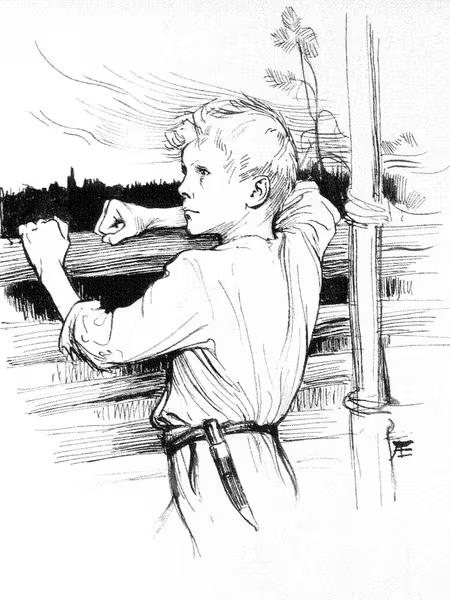
Now I’m going to venture to figure out what it was that bothered me as a child. Alfons has no height and no depth. He does nothing. He’s not going anywhere. He doesn’t believe in anything. All he needs is a hug. He wouldn’t inspire even a caries bacterium to cause cavities. I had dug Johan Ludvig Runeberg's The Tales of Ensign Stål off the shelf. Perhaps not the best reading material for a child, either. “To the Same Death I Go” comes dangerously close to what Putin wants to teach, even if the context is fundamentally different. But the soldier boy wanted something; he had fire in his veins. He didn't need a hug. He was on his way somewhere. Alfons Åberg marched in. I was maybe eight years old, because I could read. And I just thought: No, never.
I think that, on some level, I understood that Alfons lives in a world without grand goals, without demands, and without a higher purpose. That’s why there’s no meaning either. He needs a hug. Everything is gray. The ceiling is low. Bertil Åberg sits in his armchair smoking a pipe behind a newspaper. He’s present, but he’s no role model. You probably wouldn’t hear Alfons say, “He was my father, he!” There’s nothing and no one to look up to. Hopeless. You need a hug.
The Birch Tree and the Star
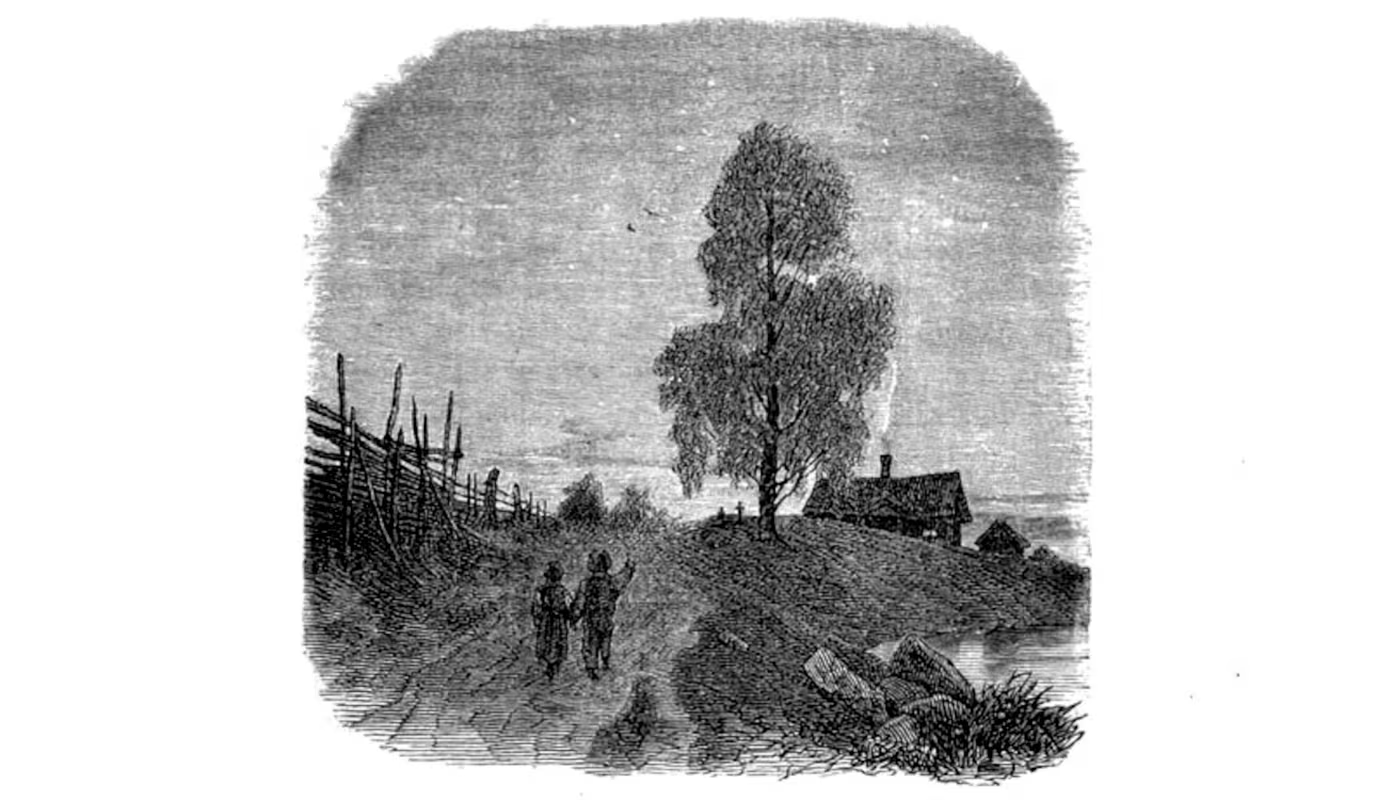
Hard times bring out the best in people. And the worst, too. The same is true of good times. Finland's great poet Zacharias Topelius wrote a fairy tale about this very thing. You need a goal; you need a home in the world and a stronghold in your heart. He begins the tale with the words: I still remember a tale from days gone by about a boy and a girl who went through life striving toward a single goal. How many of us can say the same about ourselves? (Unofficial translation)
The story is based on real events in Topelius’s own family. It tells of a pair of siblings who were abducted by the Russians during the Great Northern War (1713–1721). They are young children, five and four years old. The story resumes ten years later when they decide to walk home. They head northwest to find their family's farm, whose birch tree and star they remember. It is a romantic tale. Beautiful, I would say. When, after a year of walking, they reach the family farm, their father sums it up: “My dear children,” said the father, “a person’s life on earth is a constant journey toward eternal goals. Keep walking, keep walking with God in your hearts and the eternal goal firmly before your eyes!”
It's easy to agree with the method described in Eduard Bernstein in his famous words: das Endziel ist mir nichts, die Bewegung ist mir alles. Karin Boye expresses herself beautifully: but it is the pathway there, which is worth our while. But many people forget that her stanza begins with a wise caveat: There is probably purpose and meaning in our journey—. The original Swedish is more assertive: "Nog finns det mål och mening i vår färd". Which actually means There is purpose and meaning. It made sense to most people when the book was published in 1927. Would the children in the story have made it home, if only the journey had been their motivation? Without the birch tree and the star, they would never have made it. They would have been left behind in that gray hallway with poor Alfons. Goals and meaning matter. We need them along the way. Sometimes, a hug, too.
