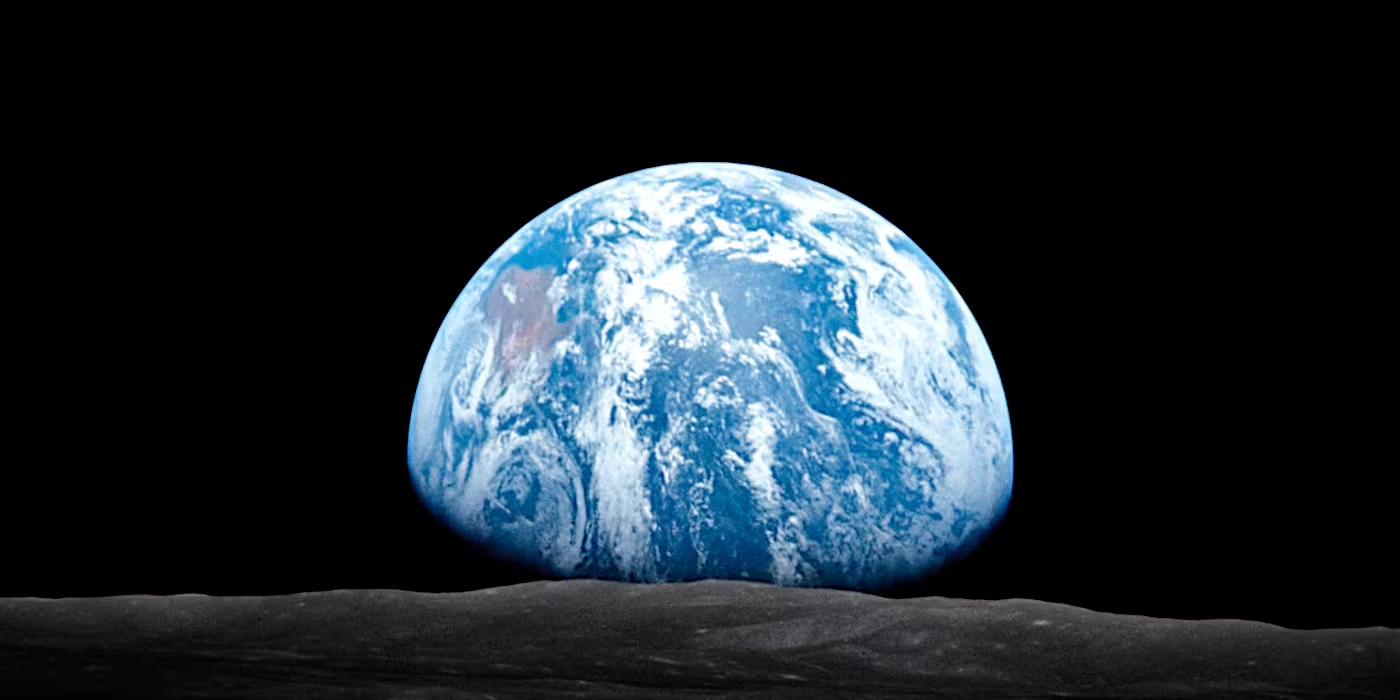
Could the Earth love us back?
Earth is home to countless different forms of life. Could there be a day when humanity is a valued friend to them? The question sounds absurd when we reflect on what we are today. It’s easy to imagine that any animal or plant would wish us to the end of the world. Humans are privileged in so many ways. But we are not oblivious to this aspect. On the contrary, our view of ourselves is fundamentally shaped by our misdeeds.
I think many people—perhaps young people in particular—find it difficult to come to terms with the role our species has taken. They don’t want to be the robber and the violent perpetrator in the story of life. Pessimism about humanity’s role has been taken to its ultimate conclusion by Pentti Linkola, Theodore Kaczynski and Derrick Jensen . Their hatred toward our own species is neither healthy nor constructive. Still, it’s not hard to understand how a pessimistic and harsh interpretation could lead there. In this post, I try to argue against their cruel view of life and humanity, without questioning the problem itself.
From Vandals to the Pillars of Life
There is a previous example from Earth’s history that I find both terrifying and hopeful. During the Devonian geological period, about 400 million years ago, a new type of plant spread across the land. 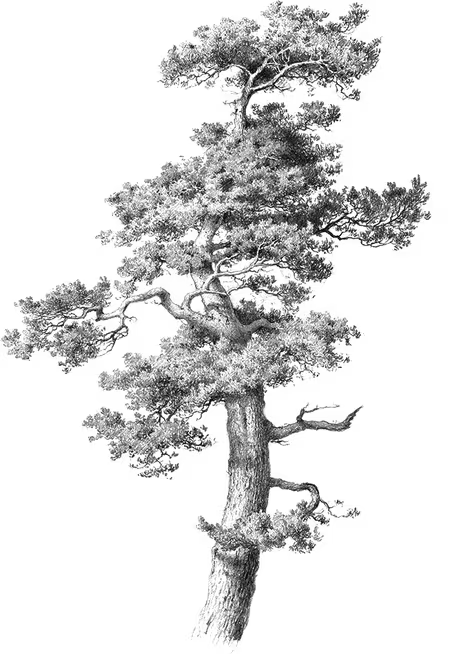 They triggered an extreme climate crisis and caused what is known as the Karoo ice age, which lasted for one hundred million years. The organisms responsible were the trees. Their trunks contain lignin which, during the Devonian period, could not be broken down by anything. Trees crowded the land everywhere, where previously there had been only low vegetation. But their lignin was indestructible, so the ground became covered with dead trees. Atmospheric carbon dioxide levels dropped sharply as carbon was stored in the dead trunks.
Trees are the very embodiment of ecology, but 400 million years ago, they were hooligans. They caused an incredibly prolonged ice age and raised the oxygen levels in the atmosphere so much that insects grew to gigantic sizes. It was only when the fungi in the soil learned to break down lignin that the balance was restored. And through their emerging collaboration with the trees, the fungi made the forest possible as we know it today. It is unclear just how significant the role of the fungi was, since, for example, the drying of wetlands may also have helped solve the problem.
Today, when I see a tree, I can't imagine a more uplifting and wonderful creature. Can we make that journey too?
There is a parallel that might have significance. The algae and phytoplankton of ancient oceans accumulated on the seafloor. They turned into oil. And out of the oil we make plastics that amass everywhere, imperishable.
Humanity is something new
As far as we know, we are the first builders of culture and technology on Earth—perhaps even in the universe. It’s no wonder we both make mistakes and commit wrongdoings. What if we had been the second, or third, in line? Everything would have been so much harder. At the same time, we would surely have had models both to emulate and to distance ourselves from.
Ever since humans have existed, they have left a deep mark on their surroundings. Most of all through the use of fire. It was our greatest innovation, and it has transformed both the planet and our bodies.
There is a credible theory that the epidemics the Spaniards brought to the Americas were a major contributing factor to the so-called Little Ice Age. The agriculture practiced by the Native Americans—which was primitive by modern standards—was likely enough to raise the temperature significantly. When they tragically died by the millions from smallpox and other epidemics, agriculture shrank and the forest spread out again. And that is why it became terribly cold in Northern Europe. If this is true, it says a great deal about our role in the cycle of life—long before coal power and cars.
It’s easy to be appalled by the damage we’ve caused. There’s no denying that environmental destruction is our doing and our fault. Are those thinkers wrong, then, who say that humanity should be wiped out—or at least drastically reduced in number?
Aside from the fact that it is morally untenable to strive for such a thing, there are other problems with that vision. Let’s say that Earth, now in its middle age, were to rid itself of its troublesome vermin. Would idyll and harmony then be restored? Certainly. For a time. But if we are culture-builders now, wouldn’t someone else follow us? Especially if we were to disappear? 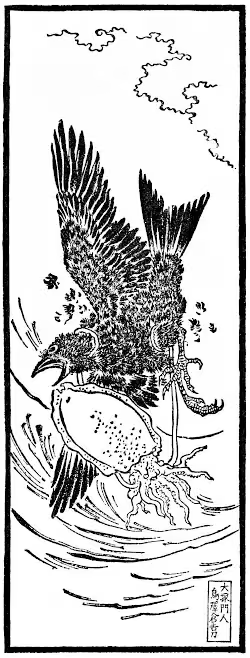 It is highly likely that the next culture-builder will emerge within a few million years. Perhaps another primate? Or why not one of the corvids? Despite their tiny brains, they’re smart enough to recognize faces, use tools, and think creatively. Their only limitation compared to us is the lack of hands. They could develop an abstract language—perhaps they’ve already started. Not to mention the octopuses. Intelligent, capable of communicating through colors and patterns, extremely agile, and with many arms. Their only limitation is that their life cycle is so short and that they aren’t social builders. But in the long run, they can surely change their circumstances. If I had to guess who’s next in line, it would undoubtedly be an octopus.
If humankind packs up its fire-making tools and disappears, it will make room for a smart octopus. One that will begin building cities in the ocean and learn to talk about the measures of triangles and the meaning of life in its super-fast optical language. It will take longer for the octopus to master fire. But won’t it harm the environment as it achieves greater success? Will it commit “human” weaknesses, follies, and excesses? Yes, unfortunately, it will.
Wiping out humanity won’t solve any problems. It’s our job to learn, improve ourselves, and do what the trees did — become good citizens. Perhaps we can make a difference and one day turn the tide—become a positive force. Perhaps a day will come when the jackdaws look at us the way we look at the trees—those are probably pretty useful, are they not? A couple of deflected meteors could fix that. And if history unfolds so happily, then we’ll have the chance to learn how to deal with those cunning octopuses.
