
The Real Truth
The mind and the world. Embracing each other from their respective sides. And yet they are always separated by so much. As human beings, we have to learn that no thought ever reaches its destination. At the same time, you’ll get nowhere if you hesitate and take every exception into account.
We must be content with the truth. Only sometimes does it brush against the veil of reality. It is this realization that is the apple. Most living beings can only react. They can foresee autumn and spring. But not much more. We are different, and yet we are not. The ancients saw humankind as something between the gods and the animals. A more modern view is perhaps that we are simply the foremost among our peers. 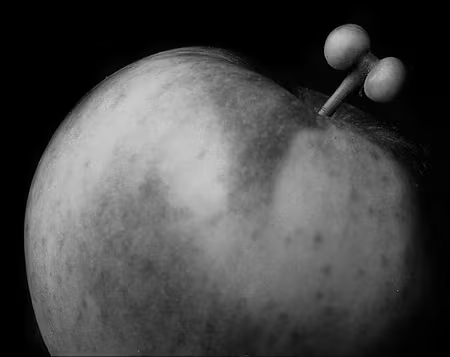
Precisely because reality is beyond our grasp, the truth is so important. It is a sketch, a blurry photo, Plato's shadows on the cave wall. But that is what makes us human. What the serpent pointed to. When we became conscious, thinking beings, all excuses disappeared. We must understand, find the right path, and stand by our choice. And when we are no longer governed by nature, we must allow ourselves to be guided by the truth—our perception of reality. Our eyes were opened, but we did not become like God. The serpent, like all skilled deceivers, wove its lie into the truth.
Truth Builds Community
It is by agreeing on truths that we can form societies. Thanks to them, we can trust one another. With the help of truth, we can understand and empathize. A society where lies are accepted suffers many misfortunes. Today, the Russian “vranyo” is probably the most talked-about example. Therefore, it may be worth remembering that the East has not always been associated with dishonesty. The ancient Persians, problematic enough in many other ways, were known for respecting the truth. The foundation for this was the Zoroastrian religion, which emphasized that light and truth stood in opposition to darkness and lies. In contrast, the ancient Greeks were inclined to admire a skilled deceiver, someone like Odysseus. According to Herodotus Persian youths were raised to ride well, master the bow, and speak the truth. He highlighted the Persians’ honesty, in part as a less flattering comparison to the Greeks.
... For untruthful words are not only evil in themselves; they poison the soul with evil.
Socrates According to Plato
Herodotus believed that the Greeks risked raising liars, since rhetoric became the core of their education. The Sophists were an emerging school of thought in Herodotus’s time. They believed that nothing can be known and that man is the measure of all things. They argued that nothing lasts and everything exists only at the moment it is observed. Plato highlighted and sharpened Herodotus’s critique of the Sophists. These could be Putin’s court philosophers today. So it is easy to agree with Herodotus and Plato.
Jimmy Carter Speaks Out
Politicians are often questioned when it comes to honesty. At the same time, it’s said that we get the politicians we deserve. Honesty is the best policy, and it’s important to lead by example. The President of the United States Jimmy Carter really went out on a limb during his first presidential campaign in 1976.
— I will never lie. I will never make a misleading statement. I will never betray those who place their trust in me.
It is a grand and weighty promise. Some argue that this promise cost Carter dearly in political terms. Perhaps so, but the prevailing view is that he kept his word. And the world would be a better place if more politicians and fellow human beings followed his example.
Before Carter embarked on a political career, he served, among other things, as a naval officer in the U. S. Submarine fleet. In the military, being honest is a matter of life and death. This is reflected in the handbook the Navy used to train Carter and other naval officers of his generation, The Bluejackets’ Manual, 1940 edition. On page 5, there are two paragraphs that are very clear on this point. Under the heading “Truthfulness,” it states: "The final test of a man is: in a pinch, will he lie?" And on the same page, under the heading "Honesty": "Enough said. Without honesty your career is limited and you are sure to fail in the long run. Nobody wants to deal with or associate with a cheat.” That’s the straight truth. Maybe that book had an influence on Carter? 
Carter was a man of faith, and that was reflected in his actions. While he never lied, there is now someone in the White House who does nothing else. The difference is like night and day. Put these two side by side. Carter was competent, conscientious, driven, effective, deeply religious, and honest. Trump is a walking disaster, cares only about himself, lacks any drive whatsoever, gets nothing done. And he sells Bibles, a book he’s never even opened himself. Jimmy Carter carried his own box; Donald Trump has probably never lifted anything that needed moving.
We are all fragile sinners. But we always have a choice. It is wise to choose a harsh truth over a flattering lie. In politics more than anywhere else. Politics isn’t simple; it’s just as complicated as reality. But it is everyone’s indisputable duty to choose a Carter and not a Trump. In that context, there are no excuses.
In an age of polarization, one must guard the distinction between truth and reality. The spheres of Plato have nothing to say about our petty quarrels. Jean-Paul Sartre has a lot to say about them, but this defender of Stalin was wrong.
Be honest, care, and stand your ground. But beware of certainty, for it is a false friend. There stands Plato with Diogenes' plucked hen, next to Sartre with Stalin's dirty laundry. And at the very back I stand with my failures and misunderstandings.
As Luther taught us in The Heidelberg Disputation: it is through the despair over our own abilities that we can receive the grace of Christ.
Documents
